
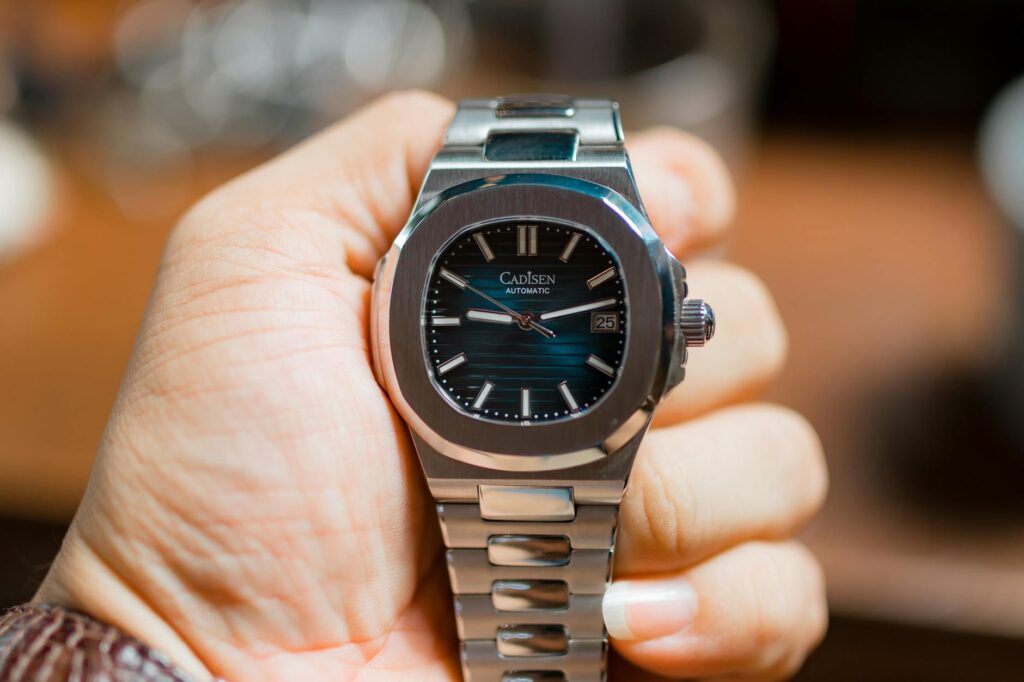
Automatic vs Self-Winding Watches: Unveiling Common Misconceptions
This guide covers everything about Automatic vs Self-Winding Watches: Clearing the Confusion for Luxury Collectors. The world of horology is filled with fascinating terminology, and two terms often used interchangeably are “automatic” and “self-winding” watches. For many, these phrases represent the pinnacle of mechanical watchmaking convenience. Both describe timepieces that harness the natural motion of the wearer to power themselves, eliminating the need for daily manual winding. Whether found in exclusive high-end horology boutiques or adorning the wrists of dedicated collectors, these watches use an intricate rotor mechanism to capture kinetic energy, ensuring a consistent and reliable power source for the timepiece. As of April 2026, the appreciation for these mechanical marvels continues to grow, with enthusiasts and newcomers alike seeking to understand their unique appeal.
Last updated: April 18, 2026
Understanding Their Functionality
At its core, an automatic watch is indeed a self-winding watch. The genesis of this technology lies in the horological challenge of creating timepieces that didn’t require constant manual intervention. By ingeniously integrating a weighted rotor that pivots with the wearer’s movements, watchmakers empowered these watches to wind their own mainsprings. This innovation ushered in an era of unparalleled convenience in mechanical watchkeeping, a sentiment that still resonates strongly today.
How Do Automatic Watches Work?
The quintessential component that defines an automatic watch is its rotor, often visible through an exhibition case back. This semi-circular, weighted component is designed to swing freely with the natural motion of the wearer’s wrist. As the rotor turns, it engages a series of gears that transfer this kinetic energy to wind the mainspring. This process ensures the watch remains powered throughout the day, simply by being worn. The efficiency of this system means that for most daily activities, the watch will maintain its power reserve without any manual input.
The complexity and elegance of this self-winding mechanism are a significant draw for enthusiasts. Unlike quartz watches that rely on a battery, automatic watches offer a captivating display of micro-mechanical engineering in motion. This internal dance of gears and springs is a testament to centuries of horological innovation. As of 2026, the appreciation for this intricate craftsmanship is perhaps more pronounced than ever, with many recognizing the value in owning a piece of functional art.
According to industry observations, a substantial portion of luxury watch production still leans heavily towards automatic movements. While precise figures fluctuate, it’s widely acknowledged that many high-end Swiss manufacturers continue to prioritize these mechanical calibers. This preference stems from the perceived prestige, longevity, and the inherent artistry associated with automatic watchmaking.
Comparing Watch Movements
To fully appreciate automatic watches, it’s helpful to understand the different types of watch movements available. In contemporary watchmaking, three primary categories dominate: manual-wind, automatic (self-winding), and quartz. Each offers a distinct experience and set of characteristics tailored to different user needs and preferences.
| Movement Type | Power Source | User Interaction | Typical Accuracy |
|---|---|---|---|
| Manual Wind | Mainspring | Daily Crown Turning | High |
| Automatic (Self-Winding) | Mainspring + Rotor | Wrist Motion | High |
| Quartz | Battery | Battery Replacement | Very High |
The accuracy of quartz movements is typically superior due to their reliance on the precise oscillations of a crystal powered by electricity. However, the charm and mechanical artistry of manual-wind and automatic movements offer a different kind of value. As reported by Monochrome Watches in their technical deep dives, the history of the automatic watch movement itself is a long and intricate one, filled with incremental innovations that have led to the sophisticated calibers seen today. This rich heritage contributes to their desirability among collectors.
Why Do Luxury Collectors Prefer Automatic Watches?
Luxury watch collectors often gravitate towards automatic watches for a confluence of reasons that extend beyond mere timekeeping. The convenience of self-winding is a primary draw, especially for those who own multiple timepieces and rotate their collection. Unlike quartz watches — which can sit dormant for extended periods without issue, automatics offer a continuous, flowing second-hand sweep – a visual hallmark of mechanical precision that many find aesthetically superior. and, automatic watches possess a longevity that quartz watches can’t match. With proper maintenance, an automatic movement can be serviced and restored to optimal performance for many decades, even a century or more. This durability and potential for heirloom status make them highly attractive for collectors seeking long-term investments and pieces that can be passed down through generations.
Recent trends, as highlighted in publications like British GQ, emphasize the enduring appeal of well-crafted automatic watches. Experts frequently recommend specific models for their build quality, movement reliability, and aesthetic appeal, solidifying their status as desirable objects of both utility and prestige. The tactile experience of winding a manual watch or the subtle hum of an automatic movement at work provides a connection to the timepiece that battery-powered watches simply can’t replicate.
What Are the Limitations of Automatic Watches?
Despite their many advantages, automatic watches do present certain limitations that potential owners should be aware of. The inclusion of the rotor mechanism adds thickness to the watch case compared to a similarly styled manual-wind or quartz watch. You can be a consideration for individuals who prefer slimmer timepieces or have smaller wrists. Another key aspect is the requirement for consistent motion. If an automatic watch isn’t worn for an extended period – typically more than 40-60 hours, depending on the power reserve – its mainspring will unwind, and the watch will stop. For collectors with numerous watches, this necessitates the use of a watch winder to keep their timepieces running and maintain their accuracy when not being worn.
and, automatic watches, being mechanical devices, are more susceptible to shocks and magnetic fields than their quartz counterparts. High-impact activities, such as playing sports or engaging in manual labor, can potentially disrupt the delicate balance of the movement, affecting its accuracy or even causing damage over time. While modern automatic movements are built to be more resilient, caution is still advised. As noted by industry experts, avoiding extreme conditions is really important for preserving the longevity and precision of these intricate machines.
Investment Value of Automatic Watches
The notion of automatic watches as investments is a topic of significant interest. Certain self-winding timepieces, especially those from established luxury brands with a history of quality craftsmanship and limited production, can hold or even appreciate in value over time. Factors such as brand reputation, material quality, movement complexity, condition, and historical significance all play a role in determining an automatic watch’s investment potential. High-end brands like Rolex, Patek Philippe, and Omega are consistently sought after by collectors, with many models demonstrating strong resale value.
While not all automatic watches are guaranteed to appreciate, the market for pre-owned luxury mechanical watches remains solid. Reports from reputable dealers and market analysts indicate that well-maintained, desirable models can see significant returns. For instance, certain vintage or discontinued models, especially those with unique complications or historical provenance, can command prices far exceeding their original retail value. This makes them attractive not only as functional accessories but also as tangible assets with the potential for capital growth. As of April 2026, the market continues to show resilience, driven by a consistent demand from both seasoned collectors and new entrants looking for enduring value.
Maintenance and Care for Automatic Watches
Proper maintenance is essential to ensure the longevity and optimal performance of any automatic watch. Think of it akin to the regular servicing required for a high-performance vehicle. The intricate mechanical components within an automatic movement require periodic attention to remain accurate and reliable. At reputable service centers, a full service typically involves a complete disassembly of the movement, thorough cleaning of all parts using ultrasonic methods, inspection for wear, lubrication with specialized oils, reassembly, and precise regulation to ensure it meets or exceeds its original chronometer standards.
The recommended service interval for most automatic watches is generally between 5 to 7 years, although this can vary depending on the watch’s complexity, usage, and manufacturer recommendations. Regular cleaning of the watch case and bracelet will also help maintain its appearance. It’s also advisable to be mindful of exposure to strong magnetic fields — which can affect the accuracy of the movement. If you notice a significant deviation in timekeeping, a demagnetization service may be necessary.
For automatic watches that are part of a larger collection and not worn daily, a watch winder can be a beneficial accessory. A winder provides a consistent, controlled rotation that mimics the motion of the wrist, keeping the mainspring wound and the watch running. Here’s especially useful for watches with complications like perpetual calendars — which require continuous operation to maintain their correct settings. While not strictly essential for the watch’s health, it enhances convenience and ensures the watch is ready to wear at any time.
Frequently Asked Questions
Do “automatic” and “self-winding” mean the same thing for watches?
Yes, in the context of modern watchmaking, the terms “automatic” and “self-winding” are used interchangeably. Both refer to a mechanical watch that powers itself using the motion of the wearer’s wrist, thanks to an integrated rotor mechanism. The distinction is largely historical and stylistic, with “automatic” being the more common term in contemporary usage.
Are automatic watches less accurate than quartz watches?
Generally, yes. Quartz watches, powered by a battery and regulated by a quartz crystal’s vibrations, offer a higher degree of accuracy, often within +/- 15 seconds per month. Automatic watches, being purely mechanical, are subject to variations caused by gravity, temperature, shocks, and the intricate interplay of their components. While high-quality automatic movements can be very accurate, often within +/- 5 to 10 seconds per day, they typically don’t match the precision of quartz movements. However, many collectors value the mechanical artistry over absolute accuracy. As Esquire noted in a recent feature, even at lower price points, mechanical Japanese watches offer impressive performance for their category.
How long can an automatic watch realistically last?
With consistent wear and proper, periodic professional servicing every 5 to 7 years, an automatic watch can last for many decades, and often, a lifetime. The solid construction of many mechanical movements, combined with the ability to replace worn parts, means these timepieces can function reliably for generations. they’re designed for longevity and are often considered heirlooms, capable of being passed down as family treasures.
What are some reputable brands known for quality automatic watches in 2026?
Several brands consistently stand out for their exceptional automatic movements and overall watchmaking quality. In the luxury segment, Rolex, Omega, Patek Philippe, Audemars Piguet, and Jaeger-LeCoultre are consistently lauded. For those seeking high-performing mechanical watches at more accessible price points, brands like Seiko (Japan), Tissot (Switzerland), Hamilton (USA/Switzerland), and Miyota (Japan) are frequently recommended by experts and enthusiasts alike. As highlighted by Two Broke Watch Snobs, finding reliable mechanical watches for beginners is more feasible than ever, thanks to these brands.
Is it absolutely necessary to use a watch winder for an automatic watch?
No, it’s not strictly necessary for the watch’s survival. An automatic watch will function perfectly well if it stops and is then manually wound and set when you wish to wear it again. However, for collectors who own multiple automatic timepieces and wish to keep them all wound and ready for immediate use, or for watches with complex complications that need to run continuously to maintain their settings (like perpetual calendars), a watch winder offers significant convenience and practical benefit.
Conclusion
The distinction between automatic and self-winding watches is a non-issue. they’re one and the same, representing a sophisticated blend of convenience and mechanical artistry. These timepieces continue to captivate enthusiasts in 2026, offering a tangible connection to a rich horological heritage. While quartz watches offer superior accuracy, the enduring appeal of automatic watches lies in their intricate engineering, the smooth sweep of their second hands, their potential for longevity, and their status as collectible items. Understanding their functionality, benefits, and care requirements allows owners to fully appreciate these mechanical marvels. Whether you’re a seasoned collector or new to the world of mechanical watches, an automatic timepiece offers a compelling combination of style, substance, and enduring value.
Source: Britannica
Related Articles
- Brilliant Earth Birthstone Necklace: Your Guide
- Heartfelt Mothers Day Gifts: Expert Picks for 2026
- Rolex vs. Omega: Investment Potential Analyzed for 2026
Editorial Note: This article was researched and written by the Wilton Jewelers editorial team. We fact-check our content and update it regularly. For questions or corrections, contact us.