The Largest Lab Diamond: Transforming Luxury with Innovation
This guide covers everything about The Largest Lab Diamond: Revolutionizing Luxury and Innovation. As of April 2026, the emergence of the largest lab-grown diamonds is reshaping the luxury market and driving significant innovation. These meticulously crafted stones combine ethical sourcing with advanced technological precision, offering consumers unparalleled size and clarity at a fraction of the cost associated with mined diamonds. This evolution presents a compelling narrative of responsible luxury and technological achievement.
Last updated: April 18, 2026
Latest Update (April 2026)
The lab-grown diamond market continues its impressive growth trajectory. According to Allied Market Research, the global market is projected to reach USD 59.2 billion by 2032, with a compound annual growth rate (CAGR) of 9.6%. This sustained expansion highlights increasing consumer acceptance and demand for these ethically produced alternatives. As reported by The Malaysian Reserve on April 14, 2026, this solid growth indicates a significant shift in consumer preferences towards sustainable luxury goods.
and, the influence of lab-grown diamonds is being felt globally. As reported by SMH.com.au on September 6, 2025, a surge in demand for lab-grown diamond rings has had a notable impact, even causing countries traditionally reliant on the diamond trade to reassess their economic futures. This sentiment is echoed in reports about Botswana’s potential future without the dominance of mined diamonds, as discussed by The Christian Science Monitor on March 4, 2026, underscoring the profound economic implications of this technological advancement.
In Europe, countries like Spain and the UK are experiencing a transformation in their luxury jewelry sectors, driven by the rise of lab-grown diamond providers, according to MEXC on December 15, 2025. This indicates a broadening geographical acceptance and integration of lab diamonds into mainstream luxury markets.
What Makes the Largest Lab Diamonds Special?
Lab-grown diamonds possess the unique ability to achieve magnificent sizes and exceptional clarity, often surpassing the limitations found in natural diamonds. This technological innovation presents consumers with a sustainable, ethical, and more affordable treasure. Unlike natural diamonds — which form over millions of years under immense geological pressure and can contain numerous internal flaws (inclusions) and external blemishes, lab diamonds are created in controlled environments. This precision allows for the growth of larger crystals with fewer imperfections. The result is a gem that replicates all the physical, chemical, and optical properties of its natural counterpart but is produced through a process that’s both more efficient and environmentally conscious.
- Exceptional Size: Lab diamonds can now be grown to sizes comparable to, and sometimes exceeding, the largest historically mined diamonds, making monumental stones accessible.
- Flawless Appearance: The controlled growth environment of lab diamond creation minimizes the occurrence of inclusions and blemishes, leading to stones with remarkable clarity.
- Environmental Responsibility: The production process for lab diamonds generally has a lower environmental impact compared to traditional mining operations.
- Cost-Effectiveness: Due to the controlled production and scalability, larger lab diamonds are considerably more affordable than natural diamonds of equivalent size and quality.
How Are Large Lab Diamonds Produced?
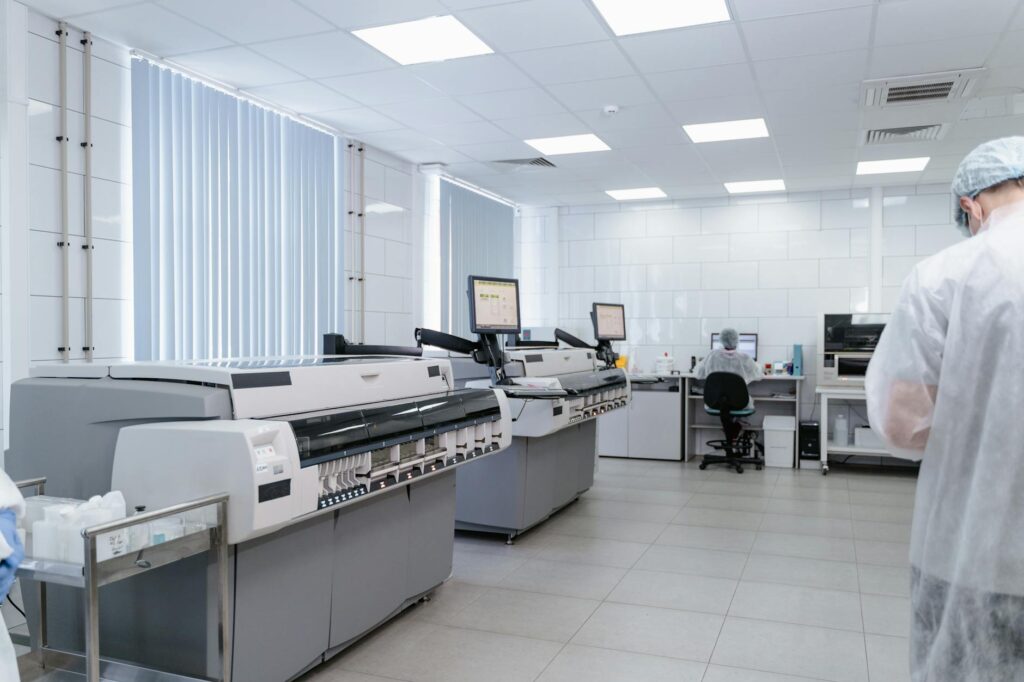
The creation of large, high-quality lab diamonds relies on two primary technological methods: High Pressure High Temperature (HPHT) and Chemical Vapor Deposition (CVD). Each method offers distinct advantages in producing diamonds with specific characteristics.
High Pressure High Temperature (HPHT)
The HPHT method closely mimics the natural conditions under which diamonds form deep within the Earth. In this process, a small diamond seed crystal is placed in a high-pressure apparatus along with a carbon source. Under extreme temperatures (typically above 1300°C) and pressures (around 5-6 GPa), the carbon source dissolves and crystallizes onto the seed, layer by layer, forming a larger diamond. This technique is especially effective for producing diamonds in a range of colors, including vibrant blues and pinks, by introducing specific elements during the growth process.
Chemical Vapor Deposition (CVD)
CVD is a more recent technology that involves breaking down carbon-rich gases, such as methane, into a plasma state within a vacuum chamber. These gases are then deposited onto a diamond substrate (often a thin diamond slice or seed) in a lower-pressure, high-temperature environment (around 700-1300°C). The carbon atoms from the gas adhere to the substrate and arrange themselves into a diamond crystal structure. CVD is renowned for its ability to produce exceptionally pure and colorless diamonds, often with very high clarity, making it ideal for large, flawless stones.
Comparing Largest Lab Diamonds to Natural Diamonds
The differences between large lab-grown diamonds and their natural counterparts are significant, especially concerning their origin, creation time, and cost. Understanding these distinctions is key for consumers making informed purchasing decisions in 2026.
| Feature | Largest Lab Diamond | Natural Diamond |
|---|---|---|
| Formation Time | Weeks to months | Millions to billions of years |
| Environmental Impact | Minimal, controlled process | High due to extensive mining operations, land disruption, and energy consumption |
| Cost | lower for equivalent size and quality | Considerably higher, especially for larger stones |
| Size Potential | Highly scalable, with increasing sizes being produced regularly | Limited by geological occurrences; extremely large stones are exceptionally rare |
| Purity & Clarity | Often near-flawless due to controlled growth; inclusions are rare | Typically includes natural inclusions and blemishes, varying widely |
| Ethical Considerations | Conflict-free, traceable origin | Potential for ethical concerns related to labor practices and conflict financing, though efforts are made to ensure ethical sourcing |
This comparison clearly illustrates why large lab diamonds are increasingly capturing the attention of consumers, jewelers, and brands seeking to align with values of sustainability, ethics, and innovation without compromising on the magnificence of size and sparkle.
Why Are Large Lab Diamonds Gaining Traction in 2026?
The rising popularity of large lab-grown diamonds is driven by a confluence of evolving consumer values, technological advancements, and economic factors. Modern consumers are increasingly prioritizing products that align with their ethical and environmental principles. Lab diamonds offer a compelling solution, providing a conflict-free alternative that embodies the timeless allure of a diamond while incorporating the benefits of modern ingenuity.
- Sustainability Appeal: Lab diamonds boast a lower carbon footprint compared to mined diamonds. Their creation process requires less energy and generates minimal waste, appealing to environmentally conscious buyers.
- Creative Design Opportunities: The availability of larger, more affordable lab diamonds empowers jewelers and designers to create more ambitious and elaborate pieces. This opens new avenues for artistic expression in high jewelry.
- Economic Viability: For many consumers, the prohibitive cost of large natural diamonds is a barrier. Lab diamonds provide a more accessible entry point to owning significant gemstones, allowing for larger stones or higher quality grades within a given budget.
- Technological Symbolism: Owning a large lab-grown diamond can signify an appreciation for scientific progress and human innovation. It represents a conscious choice for a product born from latest technology rather than solely from geological chance.
- Market Growth and Acceptance: As reported by South China Morning Post on October 26, 2025, Chinese artificial gems are impacting the traditional diamond market. This indicates a global shift where lab-grown diamonds are no longer a niche product but a major market force, driving competition and innovation.
How Are Large Lab Diamonds Being Used?
The versatility of large lab-grown diamonds extends far beyond traditional jewelry applications. Their exceptional properties make them valuable in a variety of high-tech industries and as a distinct investment category.
- Luxury Jewelry: This remains the primary application, with large lab diamonds being featured in statement engagement rings, exquisite necklaces, dazzling earrings, and even bespoke crowns for ceremonial purposes. Their size and brilliance make them ideal for center stones in iconic designs.
- Industrial Applications: The inherent hardness, thermal conductivity, and optical properties of diamonds make them indispensable in various industrial sectors. Large, high-quality lab diamonds are used in advanced applications such as high-performance cutting tools, specialized electronic components, durable optical lenses for scientific instruments, and advanced semiconductor substrates.
- Investment Assets: As the market matures, large lab-grown diamonds are increasingly viewed as traceable, ethics-driven investment assets. Their verifiable origin and consistent quality offer a stable alternative or complement to traditional investment portfolios.
What Factors Define a Quality Large Lab Diamond?
Selecting a large lab-grown diamond involves same fundamental quality factors that apply to natural diamonds, with an emphasis on certification to ensure transparency and value.
- Carat Weight: This is the most direct measure of a diamond’s size. Larger carat weights naturally command higher prices, but the value is also influenced by the other ‘Cs’.
- Cut Quality: The precision of the diamond’s cut dictates its brilliance, fire, and scintillation. A well-cut diamond maximizes light reflection, making it appear more dazzling.
- Color: While many lab diamonds are colorless (graded D-F), they’re also available in a spectrum of fancy colors, including yellow, pink, and blue, achieved through controlled introduction of specific elements during growth.
- Clarity: Lab diamonds are often created with minimal inclusions, frequently falling into the VVS (Very, Very Slightly Included) or IF (Internally Flawless) categories. However, checking the specific clarity grade on a certificate is essential.
- Verified Certification: Reputable grading laboratories, such as the Gemological Institute of America (GIA) or the International Gemological Institute (IGI), provide essential certification. These reports detail the diamond’s 4Cs, origin (lab-grown), and any unique characteristics, ensuring quality assurance and authenticity.
Frequently Asked Questions
Are lab diamonds real diamonds?
Yes, lab-grown diamonds are real diamonds. They possess the exact same physical, chemical, and optical properties as natural diamonds, including their crystal structure, hardness, and brilliance. The only difference lies in their origin: one is formed by nature over geological time, while the other is created by humans using advanced technology.
How do I verify the authenticity and quality of a lab diamond?
Authenticity and quality are verified through a reputable gemological certification. Look for reports from established laboratories like GIA or IGI. These certificates provide a detailed analysis of the diamond’s characteristics (carat weight, cut, color, clarity) and will explicitly state that the diamond is ‘lab-grown’ or ‘laboratory-created’.
Do lab diamonds hold their value over time?
The value retention of lab diamonds differs from that of natural diamonds. While natural diamonds have historically seen price fluctuations influenced by rarity and market speculation, lab diamonds tend to have a more stable value, reflecting their production costs and consistent supply. As reported by The Malaysian Reserve on April 14, 2026, the market is experiencing strong growth, suggesting increasing demand and a solidifying value proposition for consumers who prioritize ethics and sustainability.
what’s the largest carat size currently available for lab diamonds?
Lab diamond technology has advanced with producers now capable of creating stones well over 10 carats, and even exceeding 20 carats, matching the size of exceptionally rare natural diamonds. The focus isn’t just on size but also on achieving high clarity and desirable colors within these large specimens.
How should I care for a large lab-grown diamond?
Caring for a lab-grown diamond is identical to caring for a natural diamond. it’s advisable to protect it from scratches by storing it separately from other jewelry. Avoid exposure to harsh chemicals, extreme temperatures, and ultrasonic cleaners — which can sometimes be detrimental. Regular cleaning with a soft brush, warm water, and mild dish soap can help maintain its sparkle.
Conclusion
The largest lab-grown diamonds represent a significant milestone in the fusion of luxury, technology, and responsibility. As of April 2026, these stones offer consumers an unprecedented opportunity to acquire magnificent, high-quality diamonds with ethical assurance and at a more accessible price point. By understanding their origin, production methods, and quality factors, consumers can make informed choices, embracing innovation while experiencing unparalleled brilliance. Explore our collection to discover the future of luxury.
Source: Britannica
Related Articles
- The Radiant Cut Diamond: Timeless Elegance Meets Modern
- How to Start a Career in Gemology: The Ultimate 2026 Guide
- Achieve Financial Freedom: MyGreenBucks Net and Kenneth in 2026
Editorial Note: This article was researched and written by the Wilton Jewelers editorial team. We fact-check our content and update it regularly. For questions or corrections, contact us.