The Rise of AI in Jewelry Design: Your 2026 Career Blueprint
This guide covers everything about The Rise of AI in Jewelry Design: Top Career Paths for 2026 Students. The intersection of artificial intelligence and fine jewelry is no longer a futuristic concept. it’s a vibrant and rapidly evolving reality shaping career paths for 2026. As AI tools become more sophisticated and accessible, they’re empowering jewelry designers to explore unprecedented levels of creativity, efficiency, and customization. This technological integration isn’t about replacing the artistry of human hands but about augmenting them, opening doors to new roles and innovative design processes. For students and aspiring professionals looking to make their mark in the jewelry industry, understanding and embracing AI is really important.
Last updated: April 18, 2026
Latest Update (April 2026)
The jewelry industry in early 2026 is navigating significant economic shifts, with gold prices experiencing a notable surge, as reported by glossy.co. This upward trend is putting pressure on industry margins, making efficient and innovative design processes more critical than ever. In parallel, the AI sector itself is under scrutiny, with discussions around potential ‘AI bubbles’ gaining traction, as highlighted by the Harvard Gazette. For jewelry designers, this context highlights the need for AI tools that not only enhance creativity but also contribute to cost-effectiveness and market responsiveness. and, concerns about AI’s application in commerce are surfacing, with reports like the one from the Star Tribune detailing instances where AI has been used to list products without explicit consent, signaling a growing need for ethical AI deployment and intellectual property protection within the design space. The AI necklace market, meanwhile, is showing solid growth, with Market.us indicating a compound annual growth rate (CAGR) of 40%, demonstrating a clear consumer appetite for AI-influenced jewelry.
what’s AI in Jewelry Design?
AI in jewelry design refers to the application of artificial intelligence algorithms and machine learning models to assist in the conceptualization, creation, and even production of jewelry. This encompasses a lots of tools, from advanced generative AI platforms like Midjourney and DALL-E for ideation and visualization, to sophisticated Computer-Aided Design (CAD) software that incorporates AI-powered features for parametric modeling, optimization, and even automated design generation. These technologies enable designers to rapidly prototype complex forms, explore a vast array of aesthetic possibilities, and personalize designs with unparalleled precision. AI acts as a powerful collaborator, augmenting a designer’s intuition and technical skills, rather than a complete replacement for human creativity and craftsmanship.
Traditionally, jewelry design has been a labor-intensive process, relying heavily on manual sketching, sculpting, and intricate craftsmanship. While these skills remain invaluable, AI introduces a new dimension. Platforms like Midjourney can generate dozens of design concepts based on textual prompts in mere seconds, allowing designers to iterate through ideas at an unprecedented speed. AI can also analyze vast datasets of historical jewelry styles, current trends, and even material properties to suggest novel design directions or optimize existing ones for manufacturing. This combination allows for the creation of intricate structures, unique patterns, and personalized pieces that would be exceptionally challenging or time-consuming to achieve through purely manual methods.
Top AI-Driven Career Paths for 2026
The integration of AI into jewelry design is creating specialized and highly sought-after career opportunities. Aspiring professionals can now aim for roles that blend artistic vision with technological expertise. Among the most prominent are:
AI Design Prompt Engineer
This role is central to bridging the gap between a brand’s aesthetic identity and the capabilities of AI generative tools. An AI Design Prompt Engineer crafts precise and effective textual prompts to guide AI models in producing desired jewelry designs. This requires a deep understanding of both design principles—color theory, form, material aesthetics—and the nuanced language that AI models interpret. they’re responsible for translating abstract concepts and brand narratives into concrete design outputs, ensuring the AI-generated work aligns with marketing strategies and target audience preferences. According to the London Business School’s 2026 outlook on design, AI-driven conceptualization will be a significant marketing channel, making prompt engineers vital for brands looking to innovate.
Generative Jewelry Architect
This professional uses AI not just for conceptualization but for the detailed technical design of jewelry, often with an emphasis on digital fabrication. A Generative Jewelry Architect uses AI algorithms within advanced CAD software to create complex, often organic or mathematically generated, 3D models. These models are optimized for 3D printing, CNC milling, or other advanced manufacturing techniques. The role demands a strong grasp of algorithmic design, 3D modeling, material science, and the practicalities of producing intricate pieces, ensuring designs aren’t only aesthetically compelling but also structurally sound and manufacturable.
Digital Assets Manager for Virtual & Metaverse Jewelry
As the metaverse continues to expand and gain traction, the demand for digital jewelry is soaring. A Digital Assets Manager specializes in creating, curating, and managing virtual jewelry collections. This involves using AI tools to design digital-only pieces, optimize them for various virtual platforms, and manage their lifecycle within digital economies. This role requires an understanding of digital art, blockchain technology (for NFTs), 3D asset pipelines, and the unique aesthetic considerations of virtual environments. Reports from McKinsey & Company’s ‘The State of Fashion 2026’ suggest that digital fashion and accessories are becoming increasingly integral to brand strategies, making this role critically important.
AI Ethics and Compliance Officer (Jewelry Focus)
With the increasing use of AI, ethical considerations and compliance are really important. This emerging role focuses on ensuring that AI tools are used responsibly in jewelry design. This includes addressing issues like data privacy in custom design requests, preventing AI from perpetuating biases in design aesthetics, and ensuring the ethical sourcing of data used to train AI models. As reported by the Harvard Gazette regarding the broader AI bubble concerns, responsible development and deployment are key, and this role would be Key in upholding ethical standards within the jewelry sector.
Education: Where to Learn AI in Jewelry Design
Acquiring the necessary skills for a career in AI-driven jewelry design requires a hybrid educational approach, blending foundational design principles with latest AI proficiency. Prospective students should seek programs that offer both artistic training and technical instruction.
Begin by establishing a strong base in traditional jewelry design. Reputable institutions like the Gemological Institute of America (GIA) or the International Gemological Institute (IGI) offer excellent courses in jewelry design, gemology, and craftsmanship. These programs provide the fundamental understanding of aesthetics, materials, and construction that’s essential for any jewelry designer, regardless of the tools used.
Following foundational training, focus on AI and digital design skills. Online learning platforms such as Coursera, edX, and Udacity offer a wealth of courses in AI, machine learning, data science, and digital modeling. Specific courses like IBM’s ‘AI Foundations for Business’ can provide a solid understanding of AI principles applicable across industries. For specialized skills, look for courses in generative AI, prompt engineering, and advanced 3D modeling software with AI integrations. Many universities are also beginning to offer specialized certificates or master’s programs in digital design and AI applications.
Practical experience is equally vital. Engage with AI design communities, participate in online challenges, and seek internships or collaborative projects that use AI tools. Experimenting with platforms like Midjourney, Stable Diffusion, and AI-enhanced CAD software will build a practical portfolio and demonstrate your capabilities to potential employers.
AI vs. Handcraft: The 2026 Verdict
In 2026, the debate between AI-driven design and traditional handcraft isn’t about one replacing the other, but about their complementary roles. AI excels in areas demanding speed, complexity, and mass customization. It can optimize production processes, generate intricate patterns for laser cutting or 3D printing, and facilitate the creation of personalized pieces at scale. For commercial jewelry lines and high-volume markets, AI offers unparalleled efficiency and the ability to respond quickly to market demands.
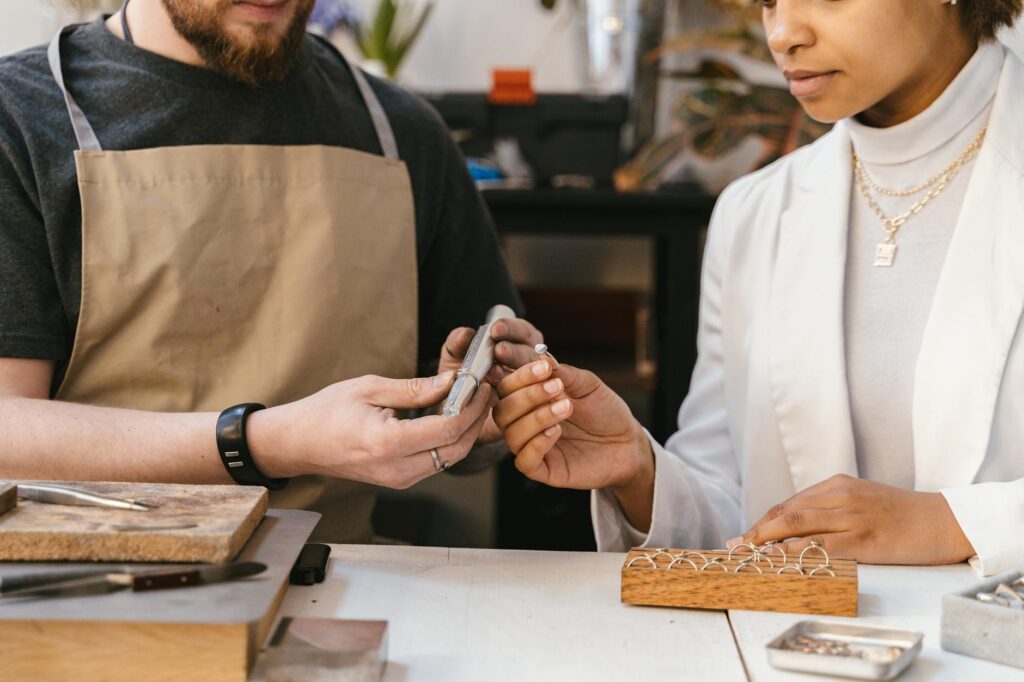
Conversely, the value and appeal of handcrafted jewelry are amplified in the age of AI. As AI handles the more standardized or complex-but-reproducible designs, unique, artisanal pieces gain a distinct premium. Handcrafted items, imbued with the maker’s touch, story, and individual skill, offer a level of exclusivity and emotional connection that AI can’t replicate. Consumers increasingly seek authenticity and unique narratives, making bespoke, handcrafted jewelry a desirable counterpoint to AI-generated mass production. The key for jewelers in 2026 is to understand this dynamic and strategically integrate AI where it enhances efficiency and creativity, while simultaneously celebrating and preserving the irreplaceable value of human artistry and traditional techniques.
The Economic Impact: Gold Prices and Market Dynamics
The current economic climate presents unique challenges and opportunities for AI-driven jewelry design. As glossy.co recently reported, gold prices are experiencing significant upward pressure in April 2026. This surge directly impacts the cost of raw materials, squeezing profit margins for many jewelry businesses. In this environment, AI tools become even more valuable. They can help designers optimize material usage, reduce waste through precise digital modeling and 3D printing, and rapidly prototype designs to ensure they meet market demand efficiently, thereby mitigating some of the cost increases associated with precious metals.
and, the burgeoning market for AI-influenced jewelry, such as the AI necklace segment projecting a 40% CAGR according to Market.us, indicates a strong consumer interest in technologically integrated adornments. This suggests that while traditional materials become more expensive, the market for innovative, digitally-enabled jewelry remains solid. Brands that can effectively use AI to create unique, desirable, and cost-efficient designs will be well-positioned to thrive despite economic headwinds.
Frequently Asked Questions
How does AI complement traditional jewelry design?
AI complements traditional jewelry design by automating repetitive tasks, generating novel design concepts rapidly, optimizing complex structures for manufacturing, and enabling personalization at scale. It augments a designer’s capabilities, allowing them to explore more creative avenues and improve production efficiency.
Are there specific software tools for AI jewelry design?
Yes, several software tools are widely used. Generative AI platforms like Midjourney and DALL-E are used for ideation and visualization. Advanced CAD software with AI integrations, such as Rhino with Grasshopper, Autodesk Fusion 360, and specialized jewelry design software, are used for detailed modeling and optimization. AI plugins for existing design software are also becoming more common.
What skills are essential for AI-driven jewelry careers?
Essential skills include a strong foundation in jewelry design principles, proficiency with AI generative tools and prompt engineering, expertise in 3D modeling and CAD software, an understanding of digital fabrication techniques (like 3D printing), basic knowledge of AI and machine learning concepts, and strong problem-solving and creative thinking abilities.
How do I start a career in AI jewelry design?
To start a career, pursue a blend of formal education in jewelry design and AI/digital technologies. Gain hands-on experience by practicing with AI design tools, building a strong portfolio showcasing AI-assisted work, and seeking internships or entry-level positions in design studios or jewelry companies that embrace technology. Networking within the industry is also beneficial.
Is AI replacing traditional jewelers?
No, AI isn’t replacing traditional jewelers. Instead, it works as a powerful tool that enhances their capabilities. While AI can automate certain design and production aspects, the artistry, craftsmanship, and unique touch of a skilled human jeweler remain highly valued, especially for bespoke and high-end pieces. AI supports and expands the possibilities for jewelers.
Conclusion
The integration of artificial intelligence into jewelry design represents a significant evolution, offering exciting new avenues for creativity and career development in 2026. By understanding and adopting AI tools, designers can enhance their capabilities, explore complex forms, and optimize production processes. While AI brings efficiency and innovation, the enduring value of traditional craftsmanship ensures a dynamic future where technology and human artistry coexist. For those entering the field, a hybrid skill set—combining artistic sensibility with technological fluency—will be the key to success in this evolving industry.
Source: Britannica
Related Articles
- Your Personalised Jewellery Ideas: Beyond Initials
- Brilliant Earth Easton: Beyond the Hype
- Best Birthday Jewelry Gift for Mom 2026: A Personal Journey
Editorial Note: This article was researched and written by the Wilton Jewelers editorial team. We fact-check our content and update it regularly. For questions or corrections, contact us.