This guide covers everything about How to Measure Ring Size: Easy Steps for a Perfect Fit. Feeling unsure about how to measure ring size at home? With basic tools and easy steps, you can confidently find your perfect fit. This guide explores various methods for accurate sizing and provides expert tips for a dependable result, ensuring your jewelry purchases are always spot on.
Last updated: April 18, 2026
Latest Update (April 2026)
As of April 2026, the demand for accurate at-home ring sizing methods remains high, driven by the continued popularity of online jewelry shopping and personalized accessories. Recent reports highlight the availability of complete ring sizer tool kits, including metal mandrels and gauge sets, designed for both hobbyists and those seeking precise measurements for significant purchases like engagement rings, as noted by ruhrkanal.news. and, expert recommendations for buying engagement rings, like those shared by Vogue, emphasize the importance of accurate sizing as a primary consideration to avoid the need for costly and potentially damaging alterations later. The market also sees continued interest in smart jewelry, with devices like smart rings gaining traction, making precise sizing even more relevant for comfort and functionality, according to WIRED.
Why is Accurate Ring Sizing Key?
Getting the right ring size is essential for comfort, security, and the longevity of your jewelry. An improperly sized ring can be more than just an inconvenience. it can lead to discomfort, the risk of loss, and the need for expensive resizing. Accurate sizing ensures the ring sits snugly on your finger without slipping off or feeling uncomfortably tight. This precision means:
- Comfortable Wear: A correctly sized ring feels like a natural extension of your hand, allowing for unrestricted movement and daily wear without irritation.
- Minimal Resizing Needed: Avoiding the need for resizing saves you time, money, and potential stress. Resizing can sometimes affect the integrity or design of intricate rings.
- Precise Surprise Gifts: For those planning a surprise, like an engagement, accurate sizing is really important. A perfectly fitting ring is a hallmark of thoughtful preparation.
- Reduced Loss Risk: A ring that’s too loose can easily slip off, especially during activities involving water or sudden movements. Proper sizing minimizes this risk significantly.
When is the Best Time to Measure Ring Size?
To achieve the most accurate ring size measurement, it’s important to consider the natural fluctuations of your body. Your fingers can change size throughout the day and due to various external factors. To get the best possible measurement:
- Measure when fingers are warm: Your fingers are typically largest when warm. Avoid measuring when your hands are cold, as this can lead to an undersized result.
- Avoid post-exercise measurements: Physical activity can temporarily increase finger size due to increased blood flow.
- Measure in the evening: For most people, fingers tend to be slightly larger in the evening compared to the morning.
- Check size multiple times: Take measurements at different times of the day and on different days to account for daily variations.
How to Measure Ring Size with a String or Paper Strip
Here’s one of the most accessible methods, requiring only common household items. Follow these steps for a reliable measurement:
- Prepare your strip: Cut a thin strip of paper or use a piece of string. Ensure it’s not too stretchy. A width of about 1/4 inch (6mm) is ideal.
- Wrap the strip at the finger base: Carefully wrap the strip or string around the base of the finger where the ring will be worn. Ensure it’s snug but not too tight – it should feel similar to how you’d want a ring to fit.
- Mark where it overlaps: Use a pen to mark the point where the end of the strip or string meets the rest of it.
- Lay flat and measure length: Remove the strip from your finger and lay it flat. Measure the distance between the end of the strip and the mark you made. This measurement is the circumference of your finger in millimeters.
- Use a sizing chart: Compare your millimetre measurement to a standard ring size chart to find your corresponding ring size. Many online jewelers provide these charts.
How to Use an Existing Ring to Find Your Size
If you have a ring that already fits one of your fingers perfectly, you can use it as a reference. This method is often more accurate than the string method if done carefully.
- Select the right ring: Choose a ring that fits the intended finger comfortably.
- Place the ring on a ruler: Lay the ring flat on a table and place a ruler across its widest inside point.
- Measure inner diameter: Carefully measure the internal diameter of the ring in millimeters. Ensure you’re measuring from the inside edge to the opposite inside edge, not the outer edges.
- Compare with size chart: Consult a ring size chart. Your measured inner diameter in millimeters will correspond to a specific ring size.
According to independent tests and user reports, this method can be highly accurate, provided the existing ring fits the correct finger well.
How Does a Printable Ring Size Guide Work?
Many online jewelers offer printable ring sizing guides. Here are convenient tools, but accuracy depends heavily on correct usage.
- Print guide accurately: it’s vital to print the guide at 100% scale. Check your printer settings to ensure no scaling or ‘fit to page’ options are enabled, as this will distort the measurements. Printing on heavy paper can also improve accuracy.
- Match rings with circles: Place your existing well-fitting ring over the printed circles until you find the one that matches the inner diameter of your ring precisely.
- Use the strip method on the guide: Some printable guides also include a ruler or a strip to cut out. If using this, measure your finger as described previously and then compare the millimetre measurement to the guide’s scale.
As QVCUK highlighted in recent content, these printable guides are a popular at-home solution, but users are advised to verify the print scale.
What Are the Benefits of a Professional Measurement Tool?
While household items can provide a reasonable estimate, professional tools offer the highest degree of accuracy and consistency, especially for those who frequently purchase rings or need precise sizing for significant investments.
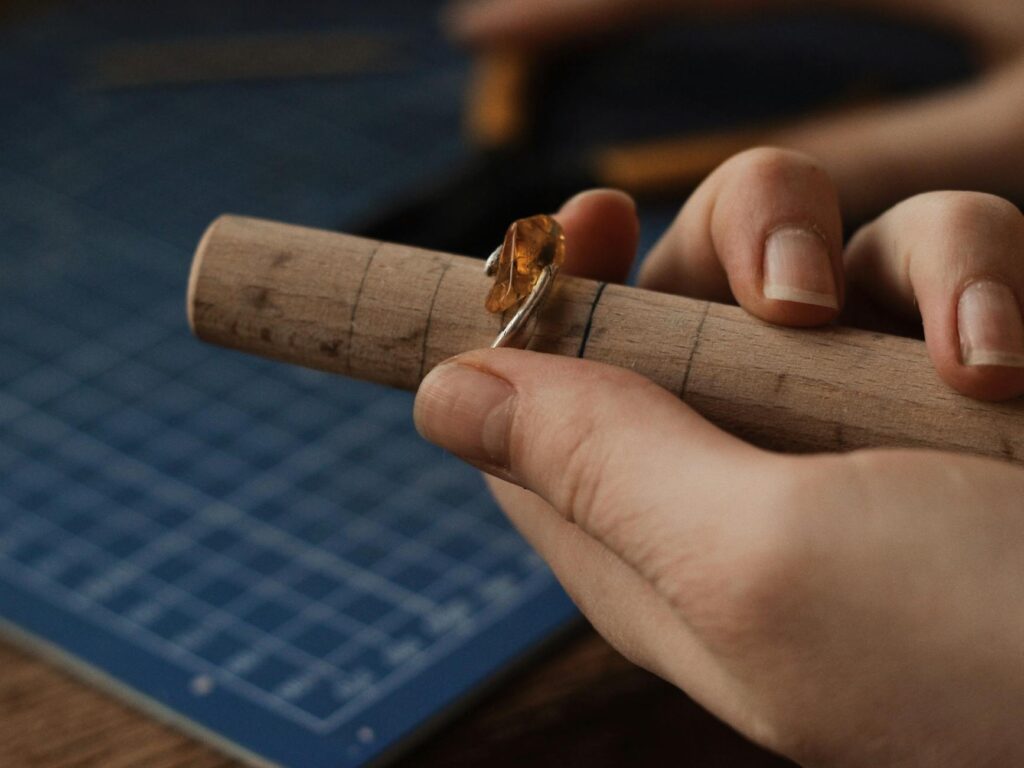
- Offers accurate sizing: Tools like a ring mandrel (a tapered metal cone) and a set of plastic or metal ring sizers provide direct measurements that mimic the feel of wearing a ring. As seen in listings on ruhrkanal.news, complete tool kits are available for home use.
- Mimics real fit: A professional ring sizer gauge set is a collection of different sized rings that you can try on your finger to find the exact fit, ensuring it slides over the knuckle comfortably and sits securely. A metal mandrel allows you to check if a specific sized ring slides on smoothly.
- Consistency: These tools are calibrated and designed for precision, offering reliable measurements that are less prone to user error than improvised methods.
Understanding Ring Size Charts and Conversions
Once you have a measurement (circumference or diameter), you’ll need to convert it into a standard ring size. Different countries use different sizing systems (e.g., US, UK, European). Most online retailers provide conversion charts.
- US/Canada: Sizes are typically whole and half numbers (e.g., 6, 6.5, 7).
- UK/Australia: Sizes are represented by letters (e.g., L, M, N).
- Europe: Sizes are usually in millimetres (circumference), ranging from about 46 to 76.
Always refer to the specific chart provided by the retailer you’re purchasing from, as there can be slight variations. Using millimetre measurements for the initial sizing helps avoid confusion when converting between systems, as reported by experts in jewelry guides.
Tips for Measuring Different Finger Types
Consider the unique characteristics of your fingers:
- Knuckle Size: If your knuckle is larger than the base of your finger, measure both and choose a size that will fit over the knuckle comfortably without being too loose at the base.
- Wide Knuckles: For individuals with wider knuckles, it’s often recommended to go up a quarter or half size to ensure the ring can pass over smoothly.
- Arthritic Fingers: Fingers affected by arthritis may swell at certain times. Measuring at different times of the day is especially important.
- Smaller Fingers: For very slender fingers, ensure the ring has a snug fit to prevent it from sliding off.
Common Pitfalls to Avoid
Accuracy is key. Be aware of common mistakes that can lead to an incorrect ring size:
- Measuring cold fingers: As mentioned, cold fingers are smaller.
- Pulling the string/paper too tight: This will result in a ring that’s too small.
- Not accounting for knuckle size: A ring must fit over the knuckle.
- Using stretchy materials: Elastic bands or stretchy strings can give inaccurate measurements.
- Printer scaling issues: Ensure printable guides are printed at 100%.
- Measuring only once: Variations throughout the day require multiple checks.
Frequently Asked Questions
Why do ring sizes change?
Ring sizes can change due to several factors including fluctuations in body temperature, time of day, humidity, and even diet. Fingers may swell in warm weather or after consuming salty foods, and shrink in cold weather or after exercise. According to numerous sources, including discussions on QVCUK, these daily variations are normal and why measuring multiple times is recommended.
How do international sizes compare?
International ring sizing systems can differ significantly. The most reliable way to compare is by converting all measurements to millimeters (either circumference or diameter). For example, a US size 7 is approximately 17.3mm in diameter and 54.4mm in circumference. A UK size N is equivalent. European sizing often directly uses millimetres of circumference. Always consult a complete conversion chart provided by a reputable jeweler or refer to the retailer’s specific sizing guide.
Should I buy a ring sizer tool?
If you frequently buy rings online or are planning a significant jewelry purchase like an engagement ring, investing in a professional ring sizer tool kit (metal mandrel and gauge set) is highly recommended. As reported by ruhrkanal.news, these kits offer superior accuracy compared to DIY methods and can save you the cost and hassle of resizing later. For casual buyers, a printable guide or string method might suffice, but a dedicated tool provides peace of mind.
Do I need special tools to measure my ring size?
No, you don’t necessarily need special tools for a basic ring size measurement. Common household items like a non-stretchy string or a thin strip of paper, along with a standard ruler, can be used effectively. Printable sizing guides available online are also a good free option. However, for the most precise measurements, especially for engagement rings or frequent purchases, investing in a professional ring sizer tool is advised.
How do I measure for someone else as a surprise?
Measuring for someone else without their knowledge requires some detective work. You can ‘borrow’ one of their existing rings that they wear on the correct finger and measure its inner diameter using a ruler, or trace the inside of the ring onto paper. Alternatively, you can compare their finger size to your own by slipping one of their rings onto your finger and marking where it fits, then measuring that spot on your finger. Another method is to use a printable sizer and discreetly try to get them to place their finger on it. As Vogue has noted in engagement ring buying guides, taking an educated guess or measuring a ring they already own are common strategies.
Conclusion
Accurately measuring your ring size at home in 2026 is achievable with a little care and the right approach. Whether you opt for the simplicity of a string or paper strip, the convenience of a printable guide, or invest in a professional ring sizer tool for ultimate precision, the key is to measure carefully, consider your finger’s unique characteristics, and check your size multiple times under varying conditions. By following these steps, you can confidently select rings that offer a perfect, comfortable fit, enhancing your jewelry-wearing experience and ensuring your precious pieces remain secure and cherished for years to come. For more insights into jewelry and timeless elegance, explore resources like Wilton Jewelers.
Source: Britannica
Related Articles
- Embrace Elegance and Charm with Pink Ring Jewelry in 2026
- Your Personalised Jewellery Ideas: Beyond Initials
- Jewelry Store Wilton CT: Avoid These Costly Mistakes
Editorial Note: This article was researched and written by the Wilton Jewelers editorial team. We fact-check our content and update it regularly. For questions or corrections, contact us.