How to Tell If a Diamond Is Real with Expert-Approved Tests
This guide covers everything about How to Tell If a Diamond Is Real: Expert-Approved Tests You Can Trust. The allure of a genuine diamond has captivated people for centuries. However, with the rise of sophisticated simulants and lab-grown alternatives, discerning a real diamond from a fake has become increasingly complex. This guide, updated for April 2026, provides expert-approved methods and insights to help you authenticate a diamond, whether you’re buying a new piece, appraising an heirloom, or simply curious about a stone’s true nature.
Latest Update (April 2026)
As of April 2026, the diamond market continues to evolve. The Washington Post recently highlighted how diamond rings are increasing in size, yet consumers often question their authenticity, stating, ‘Just don’t ask if they’re ‘real.’’ (The Washington Post, November 2025). This highlights the persistent need for reliable diamond testing methods. and, while lab-grown diamonds offer an ethical and often more affordable alternative, reports indicate they tend to lose their value more quickly than natural diamonds, as noted by the Australian Broadcasting Corporation (December 2025). differences and how to test for authenticity is more important than ever for consumers navigating these market dynamics.
Understanding Diamonds
At its core, a real diamond is a mineral composed of pure carbon atoms arranged in a specific crystal lattice structure. This structure is formed under immense heat and pressure deep within the Earth over billions of years. This natural process imbues diamonds with unparalleled hardness, brilliance, and fire – characteristics that are difficult and expensive to replicate. The rarity and durability of natural diamonds contribute to their enduring value.
It’s important to distinguish between natural diamonds and their counterparts. While lab-grown diamonds possess the same physical and chemical properties as natural diamonds – meaning they will pass many of the same authenticity tests – their origin is different. As reported by Vogue, numerous labels now offer lab-grown diamond options, presenting consumers with more choices (Vogue, September 2025). However, the intrinsic value and rarity associated with natural diamonds remain distinct.
Visual Inspection: The First Reality Check
Before employing any tools or more complex tests, a careful visual examination can often provide initial clues about a diamond’s authenticity.
Observe the Sparkle and Brilliance
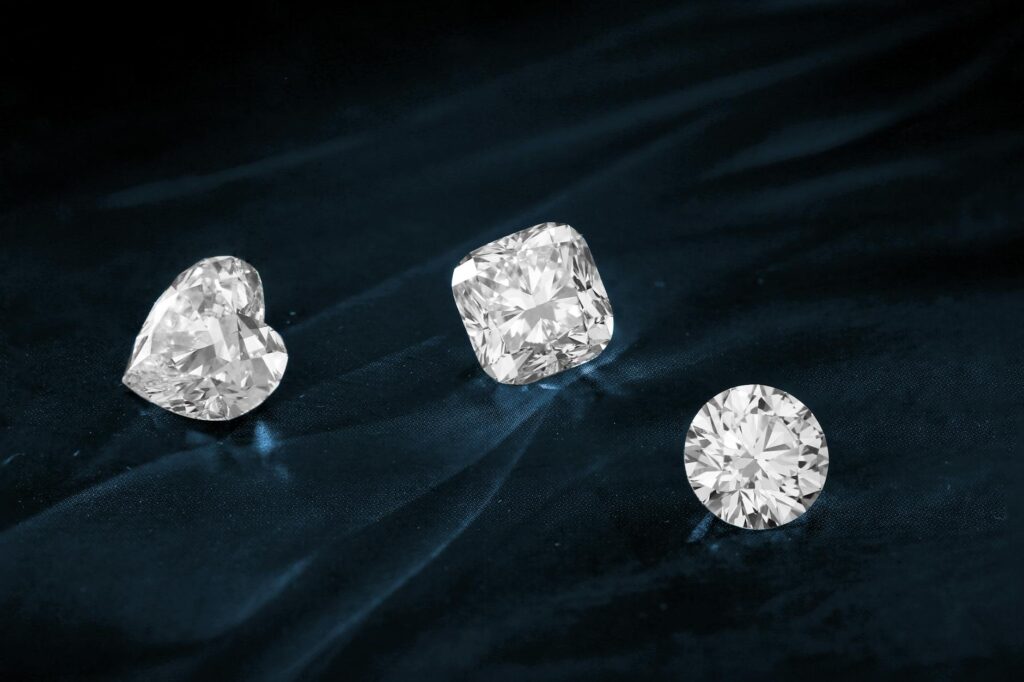
Genuine diamonds are renowned for their exceptional brilliance (the white light reflected) and fire (the dispersion of light into rainbow colors). A real diamond will exhibit a balanced play of both. If a stone displays an overwhelming amount of rainbow colors, often described as a ‘disco ball’ effect, it might be an imitation like cubic zirconia — which tends to have more exaggerated fire. Conversely, a diamond that appears too dull or glassy could also be suspect. The way light interacts with a real diamond is unique, reflecting intense white light and subtle spectral colors.
Check for Imperfections (Inclusions)
Most natural diamonds, formed under geological pressures, contain small internal characteristics known as inclusions or blemishes. Here are like tiny birthmarks, unique to each stone. While flawless diamonds do exist, they’re exceedingly rare and command premium prices. A stone that appears absolutely perfect, with no visible imperfections even under moderate magnification, might be a synthetic imitation or a heavily treated stone. Experts often look for these natural characteristics as a sign of authenticity. However, it’s Key to remember that some high-quality natural diamonds can be internally flawless, and some simulants can be manufactured with inclusions.
Inspect the Setting
The quality of the metal setting can often provide a clue about the stone it holds. Genuine diamonds are typically set in precious metals such as platinum, white gold, yellow gold (10K, 14K, 18K), or sterling silver. If the setting is made of a less expensive metal, or if it’s stamped with markings like ‘C.Z.’ (indicating cubic zirconia), it’s a strong indicator that the stone isn’t a real diamond. High-quality diamonds are almost always paired with high-quality mountings.
Simple Home Tests for Diamond Authenticity
While professional testing is the most reliable method, several simple tests can be performed at home to get a preliminary assessment. Remember to use caution and understand the limitations of each test.
The Fog Test: Fast and Simple
This test uses a diamond’s high thermal conductivity. Real diamonds disperse heat almost instantly. To perform the fog test, clean the diamond thoroughly and then breathe on it with a puff of air, similar to fogging up a mirror. Observe how quickly the fog dissipates. If the fog clears almost immediately (within a second or two), it suggests the stone is a real diamond. If the fog lingers for several seconds, it’s likely an imitation, as simulants don’t conduct heat as effectively. According to the Gemological Institute of America (GIA), this method is a quick indicator of a diamond’s thermal properties.
Water Drop Test: Density Matters
This test relies on the density of a diamond. Real diamonds are quite dense. Carefully drop the loose stone into a glass of water. A genuine diamond, due to its high density, should sink straight to the bottom. If the stone floats on the surface or drifts slowly down, it’s likely not a diamond, as many imitations are less dense. This test is best performed on a loose stone, as a setting can affect its buoyancy.
Scratch Resistance Tests (Use with Extreme Caution)
Historically, diamonds have been known for their extreme hardness, ranking a 10 on the Mohs scale. While a real diamond can scratch glass or other stones, attempting scratch tests at home is strongly discouraged by gemologists. Trying to scratch a known hard surface with the suspected diamond, or vice versa, can damage the stone or the surface, potentially leading to an incorrect conclusion or irreversible harm to the jewelry. Experts recommend avoiding this method altogether due to the risk of damage.
Tools Professionals Use for Diamond Verification
For definitive authentication, professionals rely on specialized equipment that goes beyond simple visual or home tests.
Diamond Testers (Thermal and Electrical Conductivity)
Diamond testers are electronic devices that measure a gemstone’s thermal and electrical conductivity. Genuine diamonds are exceptional thermal conductors but poor electrical conductors (with the exception of blue diamonds). Most common diamond simulants, such as cubic zirconia, aren’t good thermal conductors. A diamond tester will typically indicate a positive reading for a real diamond. These testers are widely available and are often used by jewelers and gemologists. Affordable models are accessible for consumers, offering a more reliable assessment than home-based tests.
Microscopic Examination
Under a microscope or a jeweler’s loupe (typically 10x magnification), trained professionals can meticulously examine a diamond’s internal and external characteristics. They look for the presence and type of inclusions, the precision of the facet junctions, and any signs of wear or damage that might indicate a simulant or a treated stone. The GIA emphasizes that microscopic examination is a key component of diamond grading and identification.
Spectroscopy and Other Advanced Techniques
For complex cases or to differentiate between natural and lab-grown diamonds, gemological laboratories employ advanced techniques. These include spectroscopy — which analyzes how the stone interacts with light, and X-ray fluorescence — which determines elemental composition. These methods can reveal subtle differences in atomic structure or trace elements that distinguish natural diamonds from synthetic ones.
Comparing Diamonds, Lab-Grown Diamonds, and Simulants
differences between various diamond-like stones is key to authentication.
Lab-Grown vs. Natural Diamonds
Lab-grown diamonds are chemically, physically, and optically identical to natural diamonds. they’re created in a laboratory using advanced technological processes that mimic the Earth’s natural conditions. While they’re real diamonds, their origin is artificial. Differentiating them from natural diamonds typically requires specialized laboratory equipment capable of detecting subtle growth patterns or trace elements unique to their creation process. As noted by The Washington Post, the distinction sometimes leads to consumer confusion regarding their value and ‘realness’ (November 2025).
Common Diamond Simulants
Several materials are used to imitate diamonds:
- Cubic Zirconia (CZ): The most common simulant. it’s harder than most fakes but much softer than diamond. CZ typically exhibits excessive fire and can appear too perfect. It has low heat conductivity.
- Moissanite: A naturally occurring mineral, but gem-quality moissanite is usually lab-created. it’s very hard (9.25 on Mohs scale) and has a high refractive index, giving it exceptional sparkle. Moissanite often displays more intense fire (rainbow colors) than diamond and has moderate heat conductivity. Some modern diamond testers can differentiate between diamond and moissanite based on electrical conductivity.
- White Sapphire: A natural gemstone that’s less brilliant and fiery than diamond. It ranks 9 on the Mohs scale.
- White Topaz: Softer than diamond and moissanite, with less brilliance and fire.
Here’s a comparative look:
| Feature | Real Diamond (Natural/Lab-Grown) | Cubic Zirconia | Moissanite |
|---|---|---|---|
| Hardness (Mohs scale) | 10 | 8.0-8.5 | 9.25 |
| Sparkle Type | Balanced brilliance & fire | Excessive rainbow fire, glassy | Intense rainbow fire, very brilliant |
| Fog Dispersal | Instant | Slow | Moderate |
| Weight (Specific Gravity) | ~3.52 | ~5.6-6.0 | ~3.22 |
| Heat Conductivity | Very High | Low | Medium |
| Natural Inclusions | Common (natural) | Rare (usually flawless) | Rare (natural); Lab-grown may have specific inclusions |
Certification and Documentation
A reputable diamond certificate or grading report from a recognized gemological laboratory (such as GIA, AGS, or EGL) is a vital document. It details the diamond’s characteristics, including its cut, color, clarity, and carat weight (the 4Cs). While certification provides a professional assessment of a diamond’s quality and can increase confidence, it’s essential to understand that a certificate primarily describes the stone’s attributes, not necessarily its absolute authenticity in the context of distinguishing natural from lab-grown without advanced testing. However, it works as a Key piece of documentation when verifying a diamond’s specifications.
Common Mistakes to Avoid
When attempting to determine a diamond’s authenticity, several common pitfalls can lead to misidentification:
- Relying on a Single Test: No single home test is foolproof. Different simulants may pass or fail certain tests, and the results can sometimes be ambiguous. Always use multiple methods.
- Assuming Clarity Equals Authenticity: While natural diamonds often have inclusions, flawless stones can be real, and some fakes are manufactured with inclusions to appear more authentic. Clarity is just one of the 4Cs.
- Ignoring the Setting: As mentioned, a cheap or poorly marked setting is a red flag.
- Misinterpreting Sparkle: While real diamonds have unique brilliance and fire, some advanced simulants like moissanite can mimic this sparkle very effectively.
- Overestimating Home Tests: Home tests are preliminary. They can help rule out obvious fakes but can’t definitively confirm a diamond’s identity, especially when distinguishing between natural, lab-grown, or high-quality simulants.
Why Professional Verification Matters
For significant purchases or when absolute certainty is required, professional verification is indispensable. Jewelers, gemologists, and reputable appraisal services have access to sophisticated equipment and the expertise to accurately identify diamonds and differentiate them from simulants and lab-grown alternatives. They can provide a definitive assessment, offering peace of mind and ensuring you know the true nature and value of the gemstone.
The market for diamonds, including colored varieties like green diamonds which are noted for their incredible rarity in natural forms (March 2026), is complex. Experts can help Deal with these nuances. Even with the prevalence of lab-grown diamonds, as highlighted by retail exhibitors offering free stones as lures (Retail Brew, February 2026), understanding authenticity remains really important.
Frequently Asked Questions
What color should a real diamond reflect?
A real diamond should primarily reflect brilliant white light (brilliance) and also exhibit spectral colors (fire). While some diamonds can have faint colored tints, excessive, vivid rainbow colors are often indicative of a simulant like cubic zirconia or moissanite. The overall appearance should be a balance of white light return and flashes of color.
What if the diamond floats in water?
If a diamond floats or sinks very slowly, it’s almost certainly not a real diamond. Real diamonds possess a high specific gravity (density) of approximately 3.52 g/cm³, causing them to sink quickly in water. Imitations typically have lower densities.
Can lab-grown diamonds pass these tests?
Yes, lab-grown diamonds are chemically and physically identical to natural diamonds. Therefore, they will pass most standard authenticity tests, including the fog test, water drop test, and even most basic diamond testers that measure thermal conductivity. Differentiating between natural and lab-grown diamonds typically requires advanced laboratory equipment that can detect subtle differences in growth patterns or trace elements.
Are there affordable diamond testers available?
Yes, affordable diamond testers are widely available online and from jewelry supply stores. These devices — which primarily measure thermal conductivity, can be a useful tool for consumers to distinguish real diamonds from many common simulants like cubic zirconia. However, some testers may not differentiate diamond from moissanite — which is also a good thermal conductor. More advanced testers also check for electrical conductivity to help identify moissanite.
Does certification mean the diamond is real?
Certification from a reputable gemological laboratory (like GIA) confirms the diamond’s characteristics and quality (cut, color, clarity, carat weight) based on their grading standards. It signifies that the stone has been professionally examined. While it doesn’t prove a diamond is natural versus lab-grown without advanced analysis, it’s a strong indicator of authenticity and quality when issued by a trusted source. It should always be used in conjunction with physical tests and the seller’s reputation.
Conclusion
Determining if a diamond is real involves a combination of careful observation, simple home tests, and limitations of each method. While visual inspection and basic tests can provide initial clues, professional verification using specialized equipment remains the most reliable way to authenticate a diamond, especially when distinguishing between natural, lab-grown, and sophisticated simulants. By staying informed and employing these expert-approved techniques, you can approach diamond purchases and ownership with greater confidence in 2026.
Source: Britannica
Related Articles
- What Hand for Wedding Ring? The Real Story
- Vintage Rings Wilton: The 5 Stats You Can't Ignore
- The Best Nail Care Tips for Achieving Gorgeous Nails in 2026
Editorial Note: This article was researched and written by the Wilton Jewelers editorial team. We fact-check our content and update it regularly. For questions or corrections, contact us.