Finding the right ring size can feel tricky, especially when you’re buying online or planning a surprise gift. A ring that’s too tight feels uncomfortable. A loose one slips off when you least expect it. The good news? You don’t need a jeweler’s shop to get an accurate measurement. With a few simple methods and a little patience, you can determine your size confidently from home.
This complete guide walks you through practical techniques, professional tips, common mistakes to avoid, and a comparison chart that helps you choose the best method for your situation. By the end, you’ll know exactly what to do to ensure a comfortable and secure fit.
Why Accurate Ring Sizing Matters
A well-fitted ring sits snugly without squeezing your finger. It should slide over the knuckle with gentle resistance and rest comfortably at the base of the finger.
Accurate sizing matters because:
-
Comfort depends on proper fit
-
Metal resizing may not always be possible
-
Temperature changes affect finger size
-
Surprise gifts require precise measurement
-
Loose rings can be lost easily
Small differences in millimeters make a big impact. Even a half-size error can turn a beautiful piece into something you rarely wear.
When to Measure for the Best Accuracy
Timing plays a major role in getting a reliable measurement. Fingers naturally change size throughout the day.
Follow these timing tips:
-
Measure at the end of the day
-
Avoid measuring when hands are cold
-
Do not measure after heavy exercise
-
Measure multiple times for consistency
-
Consider seasonal swelling
Warm fingers give the most accurate reading. Cold hands shrink, which leads to choosing a size that feels tight later.
Shop Heart-Shaped Pearl Earrings: Timeless Elegance That Steals Hearts
Method 1: Measuring with a String or Paper Strip
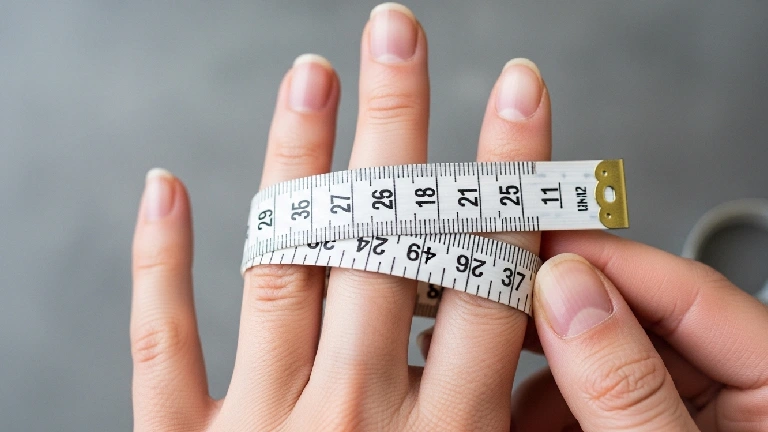
This is the most accessible at-home technique. You only need a thin strip of paper or a piece of non-stretch string.
Steps
-
Wrap the strip around the base of your finger
-
Mark where the ends meet
-
Lay it flat and measure the length in millimeters
-
Compare the measurement with a size chart
Pro Tips
-
Keep the strip snug but not tight
-
Measure over the knuckle for wider fingers
-
Repeat the process three times
This method works well for quick estimates, but accuracy depends on careful measurement.
Method 2: Measuring an Existing Ring
If you already own a ring that fits well, you can use it to determine size easily.
Steps
-
Place the ring on a ruler
-
Measure the inside diameter in millimeters
-
Compare the measurement to a ring size chart
Pro Tips
-
Measure from inner edge to inner edge
-
Ensure the ring is perfectly circular
-
Use a flat surface for precision
This method provides strong accuracy because it uses a real reference piece.
Method 3: Printable Ring Size Guide
A printable guide allows you to match a ring directly against size circles.
Steps
-
Print the guide at 100% scale
-
Place the ring over size circles
-
Choose the closest match
Pro Tips
-
Confirm printer scaling before use
-
Use standard paper thickness
-
Check multiple circles for accuracy
This method is fast and reliable when printed correctly.
Method 4: Professional Measurement Tool
A ring sizer tool includes multiple size loops that slide onto your finger.
Why It Works Well
-
Provides consistent sizing
-
Mimics real ring fit
-
Reduces measurement errors
-
Offers precise increments
If you frequently buy rings online, owning a sizer tool is a smart long-term solution.
Comparison Chart: Ring Measurement Methods
| Method | Accuracy Level | Tools Needed | Best For | Common Error Risk |
|---|---|---|---|---|
| String or Paper Strip | Medium | Paper or string, ruler | Quick estimates | Loose wrapping |
| Existing Ring Measure | High | Ring, ruler | Matching current rings | Incorrect diameter reading |
| Printable Size Guide | High | Printer, paper | Online buyers | Printer scaling issues |
| Ring Sizer Tool | Very High | Ring sizer set | Frequent purchases | Minimal |
This chart helps you choose the most practical approach based on your needs and available tools.
Understanding Ring Size Differences Worldwide
Ring sizes vary between regions. The measurement system depends on diameter or circumference.
Common systems include:
-
US and Canada sizes
-
UK alphabetical sizes
-
European millimeter sizing
-
Asian measurement systems
If purchasing internationally, always compare measurements in millimeters. This eliminates confusion between sizing systems.
Factors That Affect Ring Fit
Finger size is not fixed. Several natural factors influence measurement.
Temperature
Heat expands fingers. Cold shrinks them.
Time of Day
Fingers swell slightly in the evening.
Diet and Hydration
Salt intake and hydration levels impact swelling.
Knuckle Size
Some fingers have wider knuckles than bases.
Ring Width
Wide bands feel tighter than thin ones.
Always consider these variables before choosing a final size.
Tips for Measuring Someone Else’s Ring Size
Planning a surprise gift? You can still determine size discreetly.
Smart Strategies
-
Borrow a ring they wear often
-
Press the ring into soft soap for shape
-
Trace the inner circle on paper
-
Ask a close friend or family member
-
Compare finger size visually
Discretion and accuracy go hand in hand when measuring secretly.
How Ring Width Changes Fit
Not all rings feel the same even in identical sizes. Band width affects comfort significantly.
Thin Bands
-
Slide on easily
-
Feel looser
-
Require true size
Medium Bands
-
Provide balanced comfort
-
Suitable for daily wear
Wide Bands
-
Fit tighter
-
May require half-size larger
-
Offer strong presence
When choosing a wide band, consider going slightly larger for comfort.
Common Mistakes to Avoid
Even simple measurements can go wrong without attention to detail.
Avoid these mistakes:
-
Measuring only once
-
Using stretchy materials
-
Ignoring knuckle width
-
Measuring cold fingers
-
Guessing based on another person
Consistency is the key to accurate sizing.
Expert Tips for the Perfect Fit
Professionals rely on repeat measurements and environmental awareness. You can follow similar principles at home.
-
Measure three times for consistency
-
Choose comfort over tightness
-
Consider seasonal finger changes
-
Account for band thickness
-
Prioritize millimeter accuracy
Precision comes from patience, not speed.
Signs Your Ring Fits Correctly
A properly fitted ring behaves predictably throughout the day.
You know the fit is right when:
-
It slides on with slight resistance
-
It rotates slightly but stays secure
-
It leaves no deep marks
-
It doesn’t slip off easily
-
It feels comfortable all day
Comfort should never be compromised for appearance.
Long-Term Fit Considerations
Ring sizing is not permanent. Bodies change naturally over time.
You may need resizing if:
-
Weight changes significantly
-
Climate shifts dramatically
-
Joint swelling develops
-
Ring type changes
-
Daily activity increases
Regular wear provides the best feedback on fit.
Conclusion
Knowing how to measure ring size correctly saves time, prevents discomfort, and protects your investment. Whether you use a simple paper strip, an existing ring, or a sizing tool, accuracy comes from careful measurement and consistent technique.
A well-fitted ring should feel natural, secure, and comfortable throughout the day. By understanding timing, environmental factors, and measurement methods, you gain full control over the sizing process.
Take your time, measure more than once, and prioritize comfort. The right size transforms a ring from a decorative item into something you truly enjoy wearing every day.