What to Look For When Buying Pearl Jewelry
When buying pearl jewelry, focus on luster, surface quality, shape, size, color, and nacre. These factors determine a pearl’s beauty and value, ensuring you select a piece that truly shines. Understanding these elements is key to making a wise investment in timeless elegance.
The world of pearls is captivating, filled with natural beauty and subtle variations that make each gem unique. Whether you’re eyeing a classic strand of Akoya pearls, elegant freshwater pearl earrings, or a statement South Sea pearl pendant, knowing what to look for ensures you get the best value and a piece you’ll cherish for years. This guide breaks down the essential qualities to consider, updated with insights relevant for 2026.
Table of Contents
- What Are the Key Pearl Qualities to Consider?
- What Does Pearl Luster Mean and Why is it Important?
- How Do I Assess Pearl Surface Quality?
- What Pearl Shapes Are Available and What Should I Look For?
- How Does Pearl Size and Weight Affect Value?
- What Pearl Colors Exist and How Do I Choose?
- Why is Nacre Thickness Important in Pearl Jewelry?
- Which Pearl Types Should I Consider?
- Expert Tips for Buying Pearl Jewelry
What Are the Key Pearl Qualities to Consider?
The primary qualities to look for when buying pearl jewelry are luster, surface quality, shape, size, color, and nacre thickness. These six factors collectively determine a pearl’s beauty, desirability, and price. Think of them as the building blocks of a pearl’s value.
For instance, a pearl with exceptional luster will appear to glow from within, while a pearl with a perfectly round shape and minimal surface blemishes will command a higher price. In 2026, buyers are increasingly savvy, looking for these details to ensure authenticity and quality, especially with advancements in pearl cultivation.
What Does Pearl Luster Mean and Why is it Important?
Pearl luster is the most critical factor in a pearl’s beauty, referring to the light that reflects off its surface. High luster pearls have a bright, sharp shine that appears to come from deep within the gem. Low luster pearls appear dull or chalky.
Look for a glow that’s brilliant and distinct. When you move the pearl, the shine should follow smoothly. A pearl with excellent luster will have a mirror-like reflection. The Gemological Institute of America (GIA) grades luster as excellent, very good, good, fair, or poor.
How Do I Assess Pearl Surface Quality?
Surface quality, often referred to as the pearl’s ‘skin,’ describes the blemishes or imperfections on its surface. While perfectly flawless pearls are rare and expensive, most high-quality pearls will have minor surface characteristics. These can include small spots, lines, or chips.
When evaluating surface quality, consider the extent and visibility of these blemishes. Are they concentrated in one area, or spread out? Do they detract from the pearl’s overall beauty and luster? For most jewelry, surface characteristics that cover less than 10% of the pearl’s surface are considered acceptable, especially on larger pearls where surface area is greater.
For example, a freshwater pearl with a few small, natural surface marks might still be considered excellent quality if its luster is outstanding and the marks aren’t prominent. The key is how well these imperfections blend with the pearl’s overall aesthetic.
What Pearl Shapes Are Available and What Should I Look For?
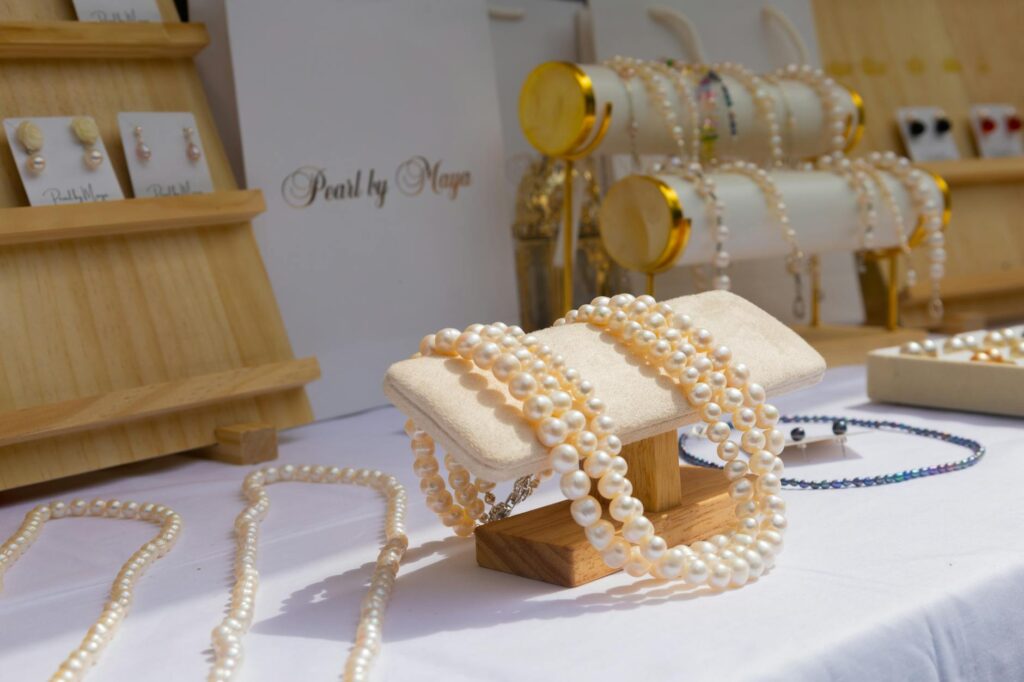
Pearls come in a variety of shapes, from perfectly round to irregular baroque. The most prized shape is perfectly round, as it’s the most difficult to cultivate naturally. Round pearls are ideal for classic strands and stud earrings.
Other desirable shapes include near-round, oval, drop (teardrop), button, and baroque. Near-round pearls are almost perfectly round but may have a slight flattening. Oval and drop shapes are symmetrical and elegant. Button pearls are flat on one side, making them great for earrings or pendants. Baroque pearls are irregular and unique, offering artistic appeal.
When selecting a shape, consider the intended use. For a uniform look in a necklace or stud earrings, round or near-round pearls are best. For a more unique, artistic piece, baroque pearls offer incredible character.
How Does Pearl Size and Weight Affect Value?
Pearl size is measured in millimeters (mm) and is a significant factor in value. Generally, larger pearls are rarer and therefore more valuable, assuming all other qualities are equal. For example, a 9mm Akoya pearl will be worth considerably more than a 6mm Akoya pearl.
Common sizes for Akoya pearls range from 6.0-9.0mm, while South Sea pearls can range from 8.0mm to over 20mm. Freshwater pearls also vary widely, with many high-quality specimens now reaching 9.0-12.0mm. When comparing pearls, always consider their size in conjunction with other quality factors.
A large pearl with poor luster or numerous blemishes will be less valuable than a smaller pearl that excels in these areas. Weighing the pearl is also sometimes used as an indicator of density and nacre thickness, especially for saltwater pearls.
What Pearl Colors Exist and How Do I Choose?
While white and cream are the most classic pearl colors, pearls naturally occur in a wide spectrum, including pink, silver, gold, blue, green, and black. The ‘color’ of a pearl is actually a combination of its body color, overtone, and the intensity of its glow.
Body color is the main hue of the pearl. Overtone refers to the subtle, iridescent colors that shimmer on the pearl’s surface, like pink, green, or blue. The most valuable pearls often have strong overtones that complement their body color.
For white pearls, a strong pink or silver overtone is highly desirable. For black Tahitian pearls, green, blue, or peacock (a mix of colors) overtones are sought after. The best color choice depends on personal preference and the wearer’s skin tone. For instance, warm skin tones often look stunning with pearls that have pink or golden overtones, while cooler tones might be enhanced by silver or blue overtones.
Why is Nacre Thickness Important in Pearl Jewelry?
Nacre is the lustrous, protective coating secreted by the pearl oyster or mollusk. It forms in layers around the irritant within the shell. The thickness and quality of this nacre layer are Key for a pearl’s luster and durability.
Thicker nacre generally leads to better luster and durability, making the pearl less prone to damage or color loss over time. Pearls with thin nacre can appear chalky and may be more susceptible to damage. Reputable jewelers, like Wilton Jewelers, ensure that the pearls they use have substantial nacre.
While difficult to measure precisely without specialized equipment, you can infer nacre thickness by observing the pearl’s luster and surface. A pearl with deep, rich luster and a smooth, well-formed surface is likely to have good nacre. For treated pearls, nacre thickness is even more critical as it’s the primary source of beauty.
Which Pearl Types Should I Consider?
different types of pearls will help you make an informed decision. The main categories are Akoya, Freshwater, South Sea, and Tahitian pearls.
- Akoya Pearls: Cultivated primarily in Japan and China, these are known for their perfectly round shape and brilliant, sharp luster. they’re typically white or cream-colored.
- Freshwater Pearls: Grown in mussels in lakes and rivers, primarily in China. They come in a vast array of shapes, sizes, and colors, and are often more affordable. High-quality, bead-nucleated freshwater pearls can rival saltwater pearls in beauty.
- South Sea Pearls: The largest and often most valuable cultured pearls, grown in Australia, the Philippines, and Indonesia. they’re known for their silvery-white, champagne, or deep gold colors and a soft, satiny luster.
- Tahitian Pearls: From French Polynesia, these are famous for their dark body colors, ranging from black to gray, green, blue, and purple. They often possess a striking overtone known as ‘peacock.’
The choice of pearl type depends on your desired aesthetic and budget. For classic elegance, Akoyas are superb. For unique colors and variety, Tahitian and South Sea pearls excel. Freshwater pearls offer incredible value and diversity.
Expert Tips for Buying Pearl Jewelry
As a jeweler with years of experience, I’ve seen countless pearl pieces. My top advice is to trust your eye but also understand the fundamentals. Don’t be afraid to ask questions about the origin and quality of the pearls. A reputable jeweler will be happy to educate you.
Consider the setting and craftsmanship as well. The metal used (gold, platinum), the design, and how the pearls are set all contribute to the overall piece. For example, a delicate pearl pendant might be best set in 14k white gold to let the pearl’s color shine through without interference.
Always look for a guarantee or certificate of authenticity, especially for higher-value pieces. This provides assurance of the pearl’s origin and quality. The GIA offers grading reports for pearls — which are a valuable resource for discerning buyers.
The average price for a strand of high-quality Akoya pearls can range from $500 to over $10,000, depending on size, luster, and uniformity. (Source: GIA Gem Encyclopedia, 2023 data)
Frequently Asked Questions
what’s the most important factor when buying pearls?
Luster is generally considered the most important factor when buying pearls. It’s the light that reflects off the pearl’s surface, giving it a beautiful glow and making it appear vibrant and alive. High luster is a key indicator of quality.
Are round pearls always the best?
Round pearls are the most classic and often the most valuable due to their rarity. However, ‘best’ depends on personal style. Unique shapes like baroque or drop pearls can be equally stunning and offer more individuality.
How can I tell if pearls are real?
Real pearls have a slightly gritty feel when rubbed against your teeth, unlike smooth imitation pearls. They also exhibit natural variations in shape, size, and surface. High luster and orient (iridescent surface colors) are also indicators of genuine pearls.
what’s the difference between cultured and natural pearls?
Natural pearls form accidentally without human intervention, making them extremely rare and valuable. Cultured pearls are formed when a nucleus is intentionally inserted into an oyster or mussel by humans, stimulating pearl growth. Most pearls available today are cultured.
How much should I expect to pay for good quality pearl jewelry?
Good quality pearl jewelry prices vary widely based on pearl type, size, and quality. A simple pair of freshwater pearl stud earrings might start around $100-$200, while a high-quality Akoya pearl necklace could range from $1,000 to $5,000 or more.
What to Look For When Buying Pearl Jewelry: A Summary
When you’re ready to purchase pearl jewelry, remember to examine luster, surface quality, shape, size, color, and nacre. These elements are your guide to selecting a piece that offers exceptional beauty and lasting value. Visit Wilton Jewelers to explore our curated collection and find the perfect pearls that speak to you.
Source: GIA (Gemological Institute)
Editorial Note: This article was researched and written by the Wilton Jewelers editorial team. We fact-check our content and update it regularly. For questions or corrections, contact us.