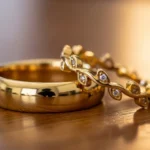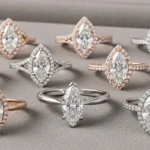
In the world of fine jewelry, the choice of metal is just as critical as the choice of gemstone. At Wilton Jewelers, we often see clients standing at a crossroads, holding two seemingly identical rings, wondering why one costs significantly more than the other. Usually, the answer lies in the hallmark. The debate of 14k gold vs 18k gold is a cornerstone of jewelry education.
I am Jack Reacher, and over the last decade, I have guided thousands of clients across London and New York through this golden dilemma. While 18k gold is often touted as the “more luxurious” option, is it always the right choice for your lifestyle? In this 1500-word deep dive, we will explore the science of alloys, the economics of gold, and the practical realities of daily wear to help you make an informed decision at Wilton Jewelers.
The Fundamental Chemistry: What is in Your Gold?
To understand 14k gold vs 18k gold, we must first acknowledge that 24k gold (pure gold) is far too malleable for jewelry. It bends, scratches, and loses its shape almost instantly. To make it functional, we mix it with alloy metals like copper, silver, zinc, or nickel.
- 14k Gold Composition: This alloy consists of 14 parts pure gold and 10 parts other metals. This equates to 3% purity. In the US and Canada, this is the industry standard for engagement rings due to its resilience.
- 18k Gold Composition: This alloy contains 18 parts pure gold and 6 parts other metals, making it 75% pure. This is the standard for high-end luxury houses in Europe and the UK.
1. Durability: The Strength of the Alloy
When comparing 14k gold vs 18k gold for daily wear, durability is usually the primary concern. Because 14k gold contains a higher percentage of harder base metals, it is physically tougher. It resists scratches, scuffs, and the daily “dings” of life much better than 18k gold.
If you are buying a piece that will see hard use—such as a wedding band for someone with an active job—14k gold is the practical winner. However, 18k gold, while softer, is still durable enough for daily wear if treated with care. At Wilton Jewelers, we often recommend 18k for earrings and necklaces where the metal is less likely to strike hard surfaces.
Purity and Hallmark Reference Table
For our international audience at Wilton Jewelers, here is how to identify your gold by its regional stamps:
| Karat | Gold Purity | US Hallmark | UK/AU Hallmark | Metal Hardness |
| 24k | 99.9% | 24K | 999 | Very Soft |
| 18k | 75.0% | 18K | 750 | Moderate |
| 14k | 58.3% | 14K | 585 | High |
| 10k | 41.7% | 10K | 417 | Very High |
2. Aesthetics: The Visual Glow
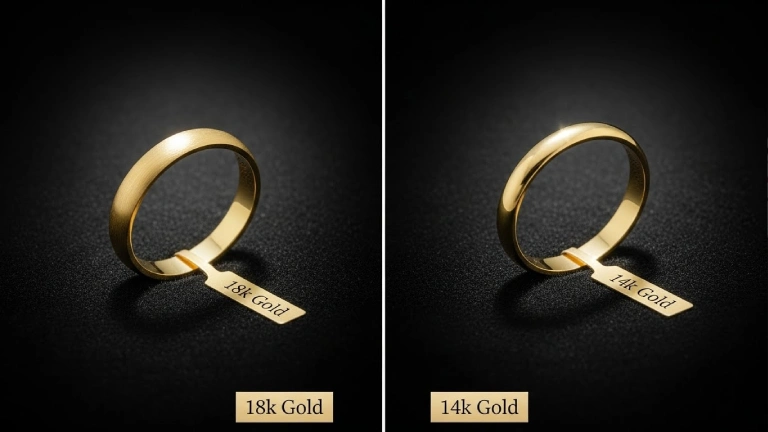
The beauty of 18k gold lies in its color. Because it has a higher concentration of pure gold, 18k gold possesses a richer, deeper, and more vibrant yellow hue. In contrast, 14k gold can appear slightly paler.
At Wilton Jewelers, we find that clients with warmer skin tones often prefer the “royal” glow of 18k gold. However, if you are looking for Rose Gold or White Gold, 14k often provides a more distinct “pink” or “silvery” look because the higher alloy content allows for more dramatic color manipulation.
3. Value and Resale Potential
From an investment standpoint, the 14k gold vs 18k gold debate is straightforward. Since 18k gold contains roughly 17% more pure gold than 14k, it will always command a higher price. This applies to both the retail price and the future scrap or resale value.
For those looking at jewelry as a “portable asset,” 18k gold is the superior choice. However, if the goal is to maximize your budget for a larger diamond or gemstone, choosing 14k gold allows you to reallocate those funds into the center stone.
4. Skin Sensitivity and Allergies
This is a critical section for our readers in the US and UK. Many people have a nickel allergy. Because 14k gold contains more “other metals,” it is more likely to contain nickel or other irritants.
18k gold is significantly more hypoallergenic. If you have sensitive skin, I, Jack Reacher, strongly suggest investing in 18k gold. It is much less likely to cause the “jewelry rash” that many people experience with lower-karat alloys.
The Diamond Connection: Security in Settings
When you are setting a high-value diamond, you need to consider the prongs. While 14k gold is harder and more “springy,” which holds stones very securely, it can be more brittle. 18k gold is more “malleable,” allowing a jeweler at Wilton Jewelers to wrap the metal more smoothly around a stone, though it may require checking every few years to ensure the prongs haven’t moved.
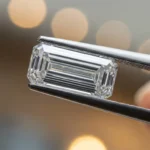
A clean, high-clarity diamond deserves the best possible metal. Pairing a VVS diamond with 18k gold is a classic luxury combination that we swear by.
International Sizing and Fit
Whether you choose 14k gold vs 18k gold, the fit must be perfect. At Wilton Jewelers, we provide a seamless international conversion:
| US/Canada Size | UK/Australia Size | Inside Diameter (mm) |
| 6 | L 1/2 | 16.5 mm |
| 7 | N 1/2 | 17.3 mm |
| 8 | P 1/2 | 18.1 mm |
Maintenance: Keeping the Shine Alive
Regardless of the karat, gold requires care. 18k gold will develop a “patina” (tiny scratches) faster than 14k. Some collectors love this look as it shows the “life” of the jewelry. Others prefer the high-polish look of 14k.
Regular cleaning at home, as described in our previous guides, is essential. For 18k gold, I recommend using even softer brushes to avoid unnecessary surface wear.
External Authority: The Global Standard
For further verification of these standards, I recommend consulting the World Gold Council. They provide the scientific data that backs the purity regulations we follow at Wilton Jewelers.
Jack Reacher’s Final Verdict
- Buy 14k Gold if: You have an active lifestyle, want the best durability for your money, and are working with a specific budget that prioritizes the gemstone.
- Buy 18k Gold if: You want a richer color, have sensitive skin, or are looking for a high-prestige heirloom piece that holds more intrinsic gold value.
At Wilton Jewelers, we take pride in both. There is no wrong choice, only the choice that is right for you.